Yosemite National Park, CA — November 2025.
As the U.S. federal government shutdown stretches into its second month, Yosemite National Park has become an unintentional experiment in what happens when one of the country’s most visited natural treasures loses its regulatory oversight. With most National Park Service (NPS) staff furloughed, reports of illegal activity—from unauthorized camping and squatting to dangerous BASE jumping—have surged across the park.
During the shutdown, Yosemite remains technically open to visitors, but the absence of rangers and law enforcement has left critical gaps in supervision. Facilities such as restrooms, parking areas, and main roads continue operating, thanks to a skeleton crew supported by entrance fees and volunteers. However, essential services like research, maintenance, and safety patrols have been sharply reduced.
“Like the Wild West”
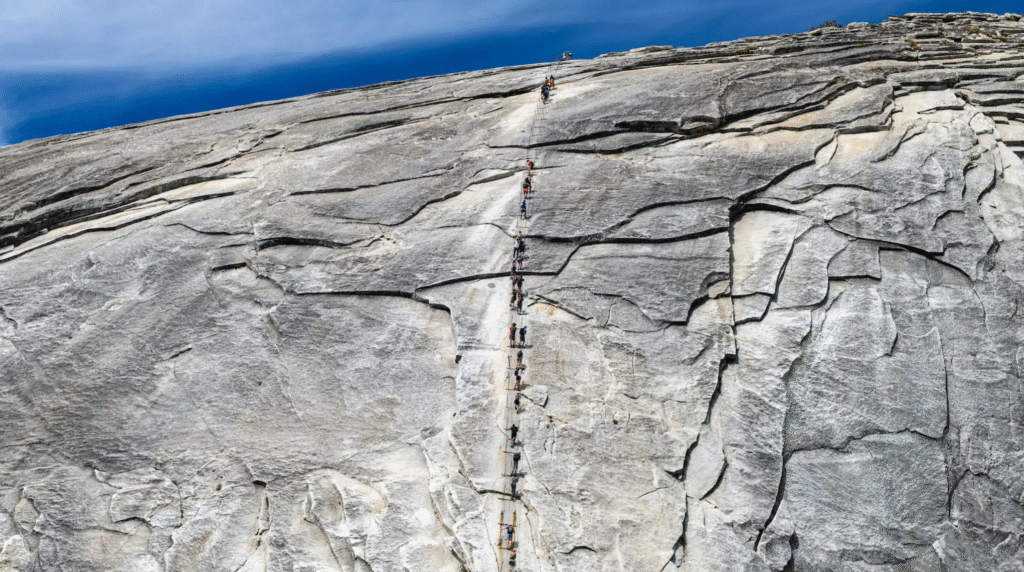
Visitors have been caught illegally climbing Half Dome without permits and leaping from El Capitan in unsanctioned BASE jumps—both serious violations of park regulations. Others have reportedly set up unauthorized campsites or parked overnight in restricted areas.
One ranger, speaking anonymously to local reporters, described the situation as “the Wild West,” emphasizing how even a short lapse in enforcement can lead to chaos. “Most visitors mean well,” the ranger said, “but when rules disappear, boundaries disappear too.”
Environmental and Safety Concerns
Environmental groups have expressed concern that the absence of full-time oversight could cause long-term damage to fragile ecosystems. Off-trail camping and litter accumulation threaten both wildlife and watershed health. Moreover, risky activities like BASE jumping not only endanger participants but also stretch the limited emergency response capacity of the few rangers still on duty.
The NPS has maintained that it continues to provide “essential services necessary to protect life, property, and public health.” Yet experts warn that those limited resources cannot substitute for comprehensive park management. “This is exactly what we feared,” one conservation advocate told The Guardian. “When oversight fades, even temporarily, national parks become vulnerable—to people, not just to nature.”
Visitors Divided
Reactions among visitors remain mixed. Some travelers describe the park as “eerily peaceful” and note that facilities are still functioning smoothly in high-traffic areas. Others, particularly those visiting remote valleys and high alpine zones, have reported visible rule-breaking and signs of neglect.
“I’ve never seen this many people camping wherever they want,” said one hiker. “It’s beautiful, but it feels like no one’s in charge.”
A Reminder of Fragility
The unfolding situation at Yosemite underscores the delicate balance between access and preservation. The park’s enduring popularity—normally a point of pride—has turned into a stress test for how public lands function when the government stops.
For now, the granite cliffs of El Capitan still rise in silence, but the question lingers: how long can that silence remain unbroken without stewardship?
Sources:The Guardian
See more news on Outdoor Observer